This article explains how to create screener questions in Refari. A screener question is an extra question a candidate answers when they apply for one of your jobs, so you can capture useful information that would not normally appear on a CV, such as their location, work rights or notice period.
Setting screener questions up happens in three stages: first you create the questions (this article), then you group them into a question set, and finally you map the answers across to your ATS or CRM. This article covers the first stage, and the other two are linked at the end.
Step 1: Open Question Config
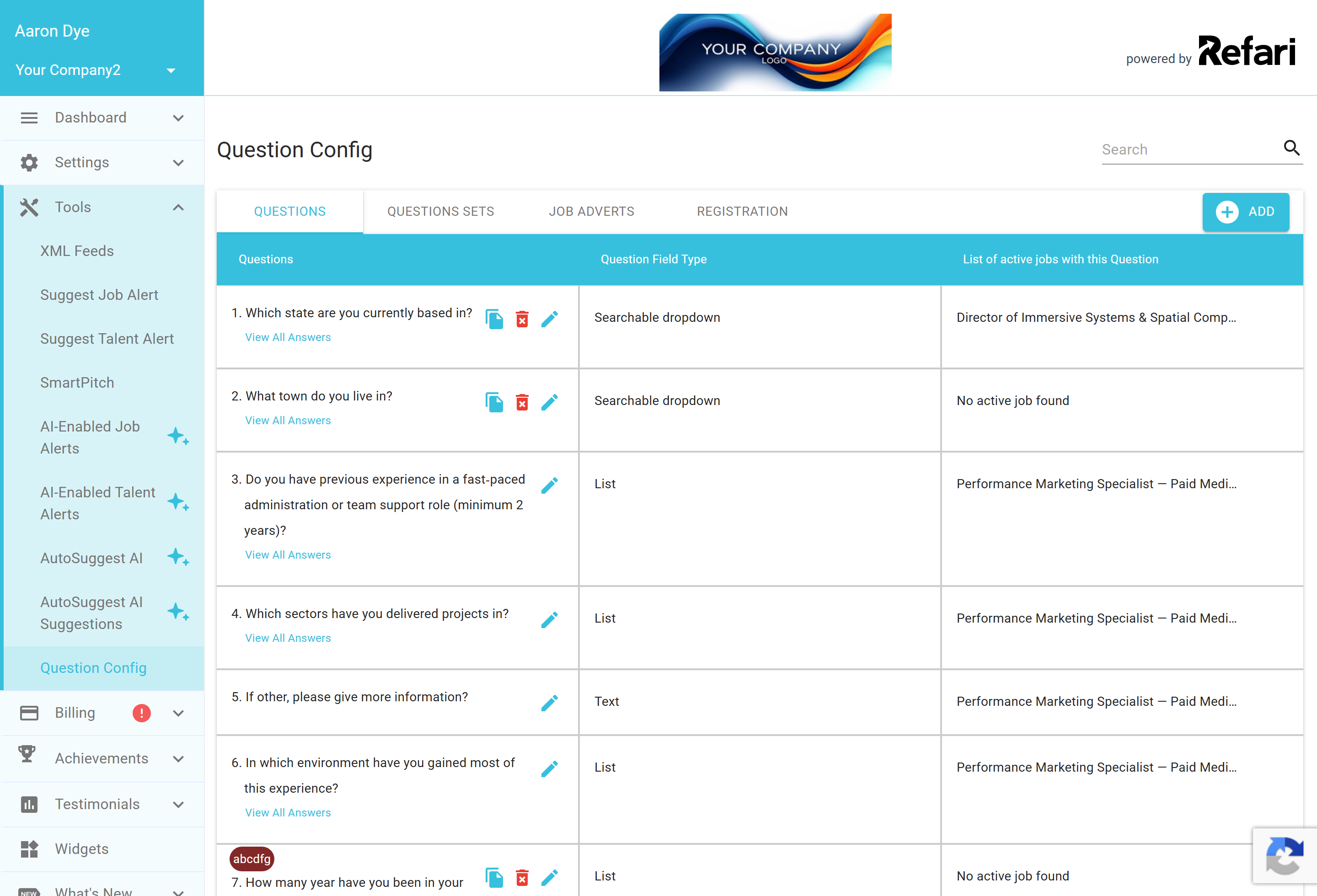
To create your questions, go to "Tools > Question Config" in Refari. This is where all your questions live: you build up a library of questions here, then later choose which of them belong in each question set. To start a new question, click the + Add button in the top right.
Step 2: Add a question
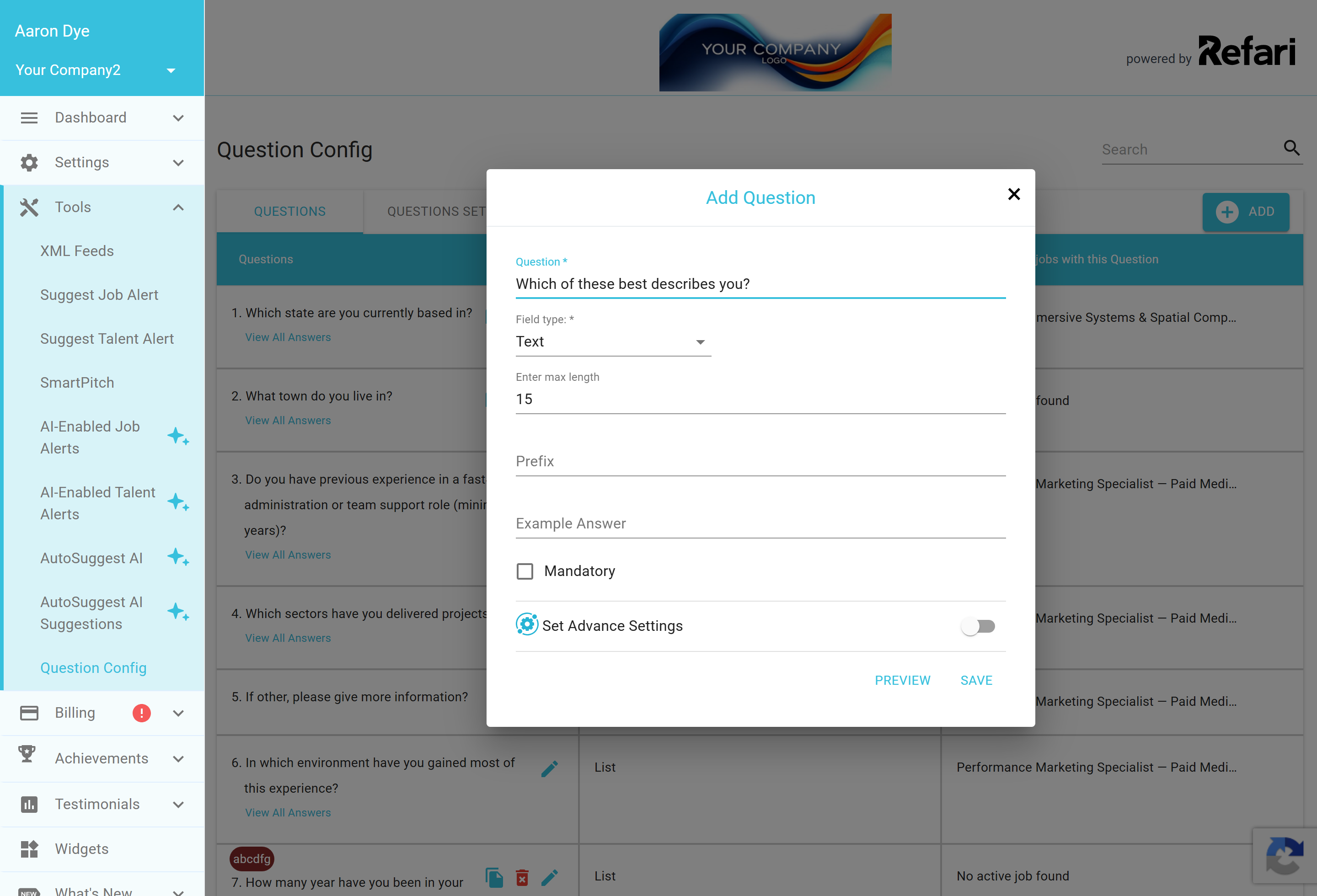
Give your question a title in the Question field, then choose how it should be answered using the Field type setting. You can also tick Mandatory if the candidate must answer it before they can submit their application.
Choosing a field type
The Field type controls how the candidate answers the question. The options are:
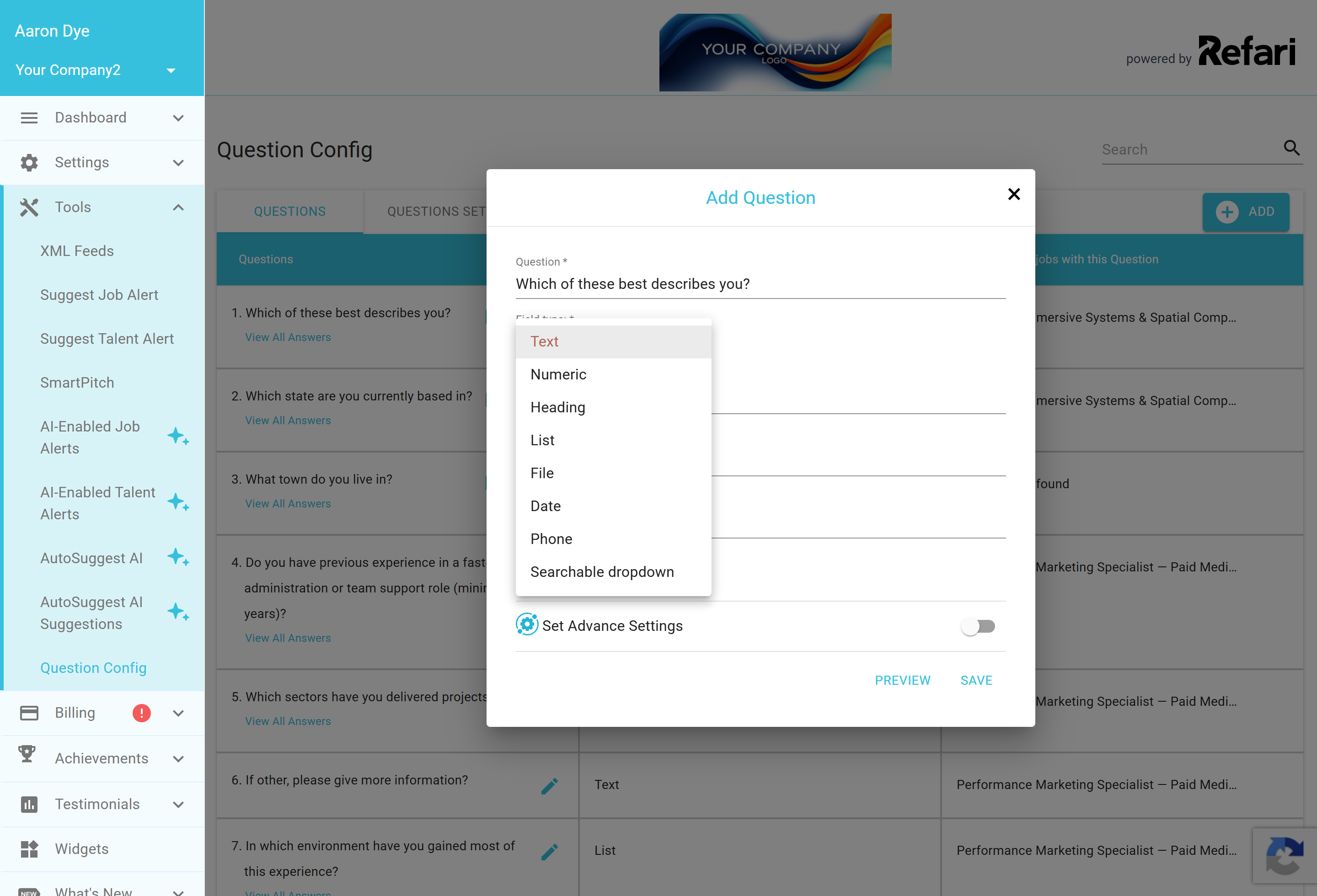
- Text: a free-text answer (for example, "Describe a skill that will help you in this role").
- Numeric: a number (for example, "How many years have you worked in construction?").
- Heading: not a question, but a heading you can use to group questions and start a new page.
- List: the candidate selects from a set of options you provide, shown as tick boxes or radio buttons.
- File: the candidate uploads a document (for example, a copy of a certificate).
- Date: the candidate chooses a date (for example, "When are you available to start?").
- Phone: a phone number, captured in the correct format.
- Searchable dropdown: the candidate searches a list you provide and picks from it, which is ideal for long lists such as countries, states or cities. There is a dedicated guide for this one: How to add a Searchable Dropdown question ↗
Adding options for a List or Searchable dropdown
If you choose List or Searchable dropdown, add each option under Enter list values, typing each one and pressing Enter. For a List, you can also decide how many answers the candidate may give.
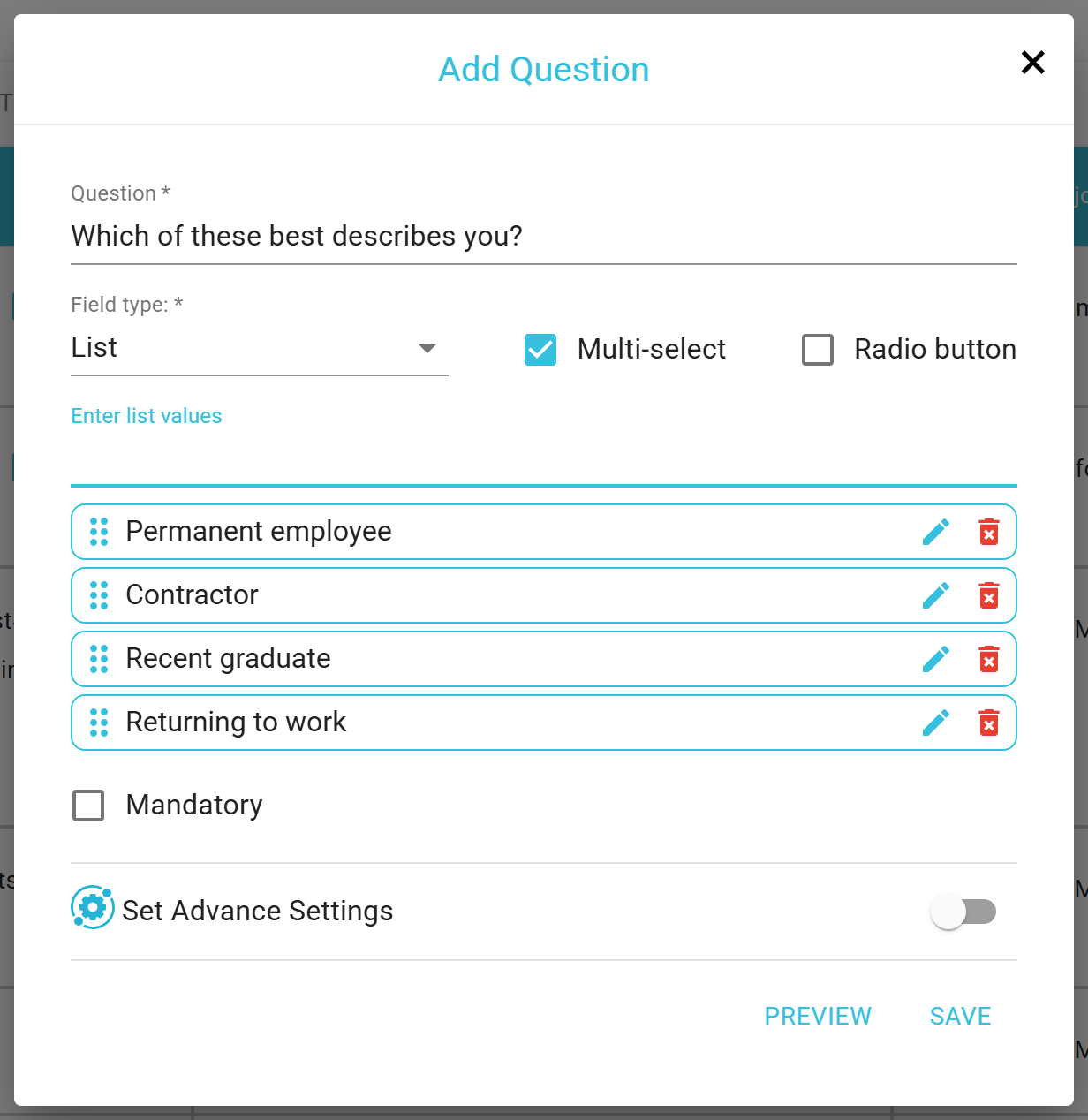
- Multi-select: the candidate can choose several options (shown as tick boxes).
- Radio button: the candidate can choose only one option.
Note: Marking a question as Mandatory means the candidate must answer it before they can submit their application, so reserve it for the details you genuinely need.
Idea: Use a Heading to group related questions together. A heading always starts a new page, so it is a tidy way to break a longer set of questions into clear sections.
What the applicant sees
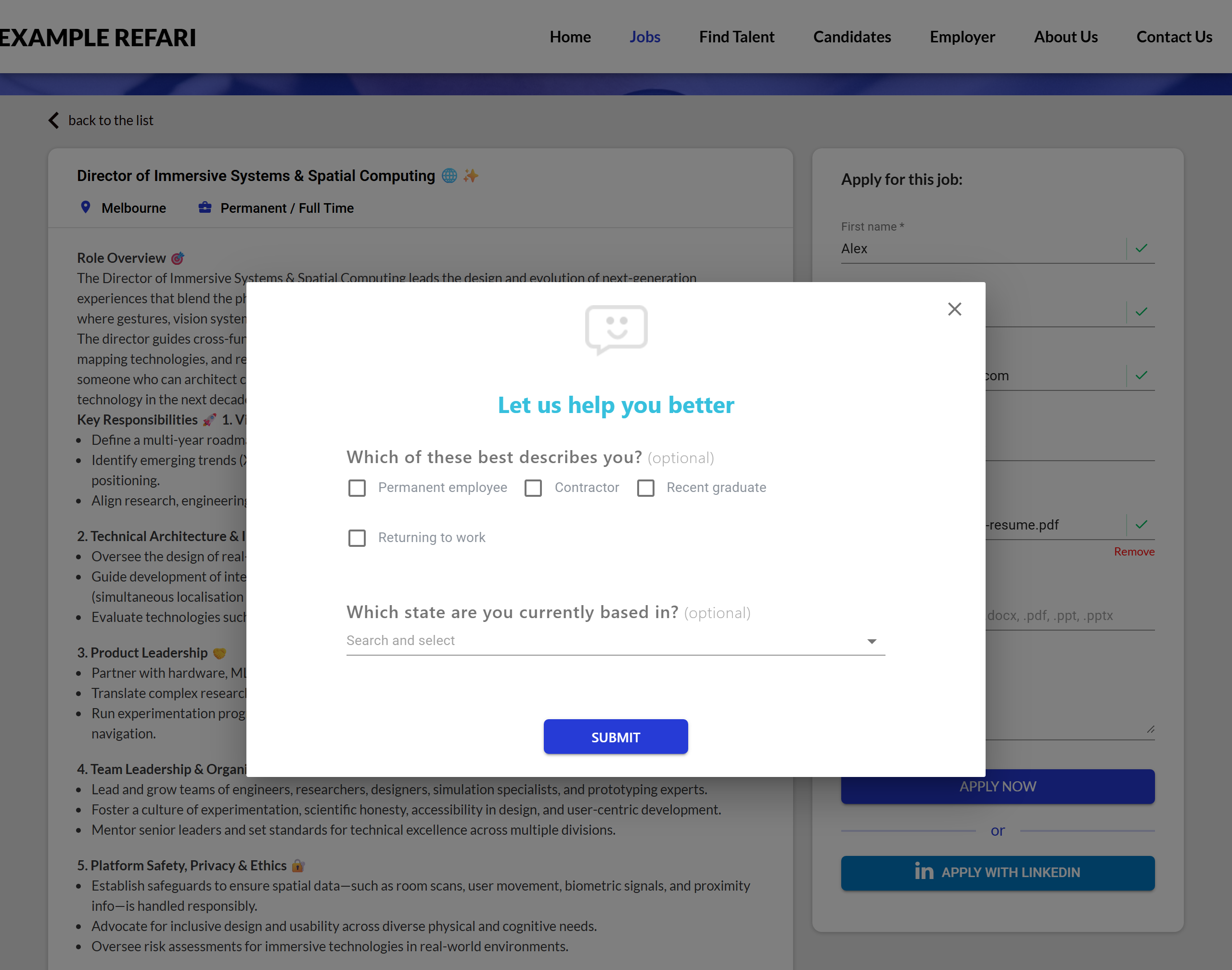
When a candidate applies for a job that your questions are attached to, the questions appear once they have filled in the basic details (name, email and CV). Only three questions are shown per page, so the form never feels overwhelming. Below is how a couple of questions look on a live application.
Next steps: question sets and mapping
A question on its own will not appear on a job just yet. Questions only show on an application once they are part of a question set that is attached to the job.
Once you have built a few questions, the next step is to group them into a set: How to create Question sets for your screener questions ↗
After that, you can send the answers through to the candidate record in your ATS or CRM by mapping them across: How to map screener question answers to your ATS/CRM ↗
Final Notes
It is worth building a library of reusable questions once (locations, work rights, qualifications and so on), as you can then mix and match them into different question sets for different roles. If you get stuck at any point, our support team is happy to help.
Other articles you might be interested in: Screener Questions - What are they? | How to create Question sets for your screener questions | How to add a Searchable Dropdown question
Was this article helpful?
That’s Great!
Thank you for your feedback
Sorry! We couldn't be helpful
Thank you for your feedback
Feedback sent
We appreciate your effort and will try to fix the article